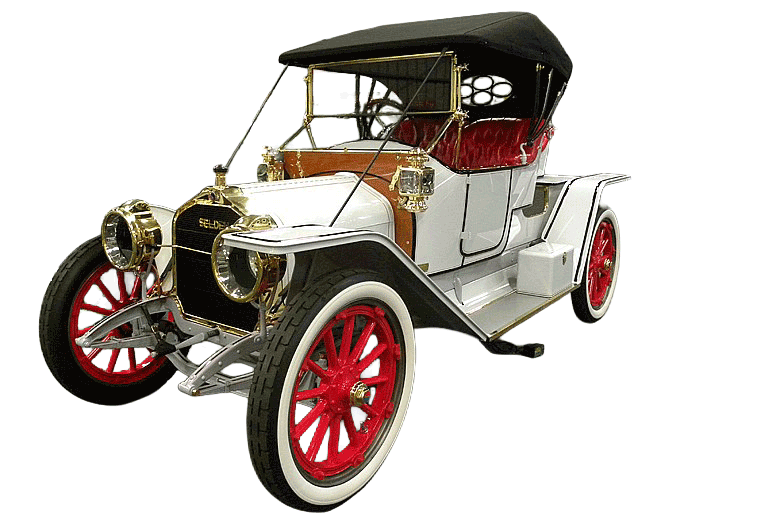
The 1911 Selden tells the story of one of the most controversial patents in early automotive history. Its roots go back to inventor George B. Selden and a legal battle that changed the future of the American automobile.
First, on November 5, 1895, George B. Selden received a patent for an internal combustion engine designed for use in an automobile. Instead of building cars, Selden used the patent to control the fast growing auto industry. As a result, many manufacturers had to license the patent through the Association of Licensed Automobile Manufacturers before they could legally build gasoline powered cars.
Because of this arrangement, Selden collected royalties on nearly every licensed automobile sold in the United States. Each manufacturer paid roughly 0.75 percent of every sale. Many early cars even carried a small plate that read Selden Patent, proving the royalty had been paid.
However, not everyone agreed with Selden’s claim. Most notably, Henry Ford refused to pay the licensing fee. Instead, Ford challenged the patent in court. What followed was an intense legal fight that lasted eight years.
Finally, in 1911, the court ruled that the modern gasoline automobile engine did not rely on Selden’s original design. With that decision, Selden lost control over the industry. More importantly, the ruling opened the door for rapid innovation and competition among American automakers.
Today, the 1911 Selden represents a turning point in automotive history. It reminds us how one patent, one court case, and one determined automaker helped shape the future of the automobile.