The One Twenty was Packard’s workhorse from 1935 to 1940, a time when the company needed to adapt to changing markets. As Cadillac dominated the luxury segment, Packard broadened its appeal with this new line, less opulent perhaps, but it kept the proud Packard name alive and thriving. Originally named for its 120-inch wheelbase, the One Twenty offered an eight-cylinder engine producing 110 horsepower and a top speed of 85 mph. By 1940, the wheelbase stretched to 127 inches, and horsepower rose to 120, fitting for a model that defined refined performance.
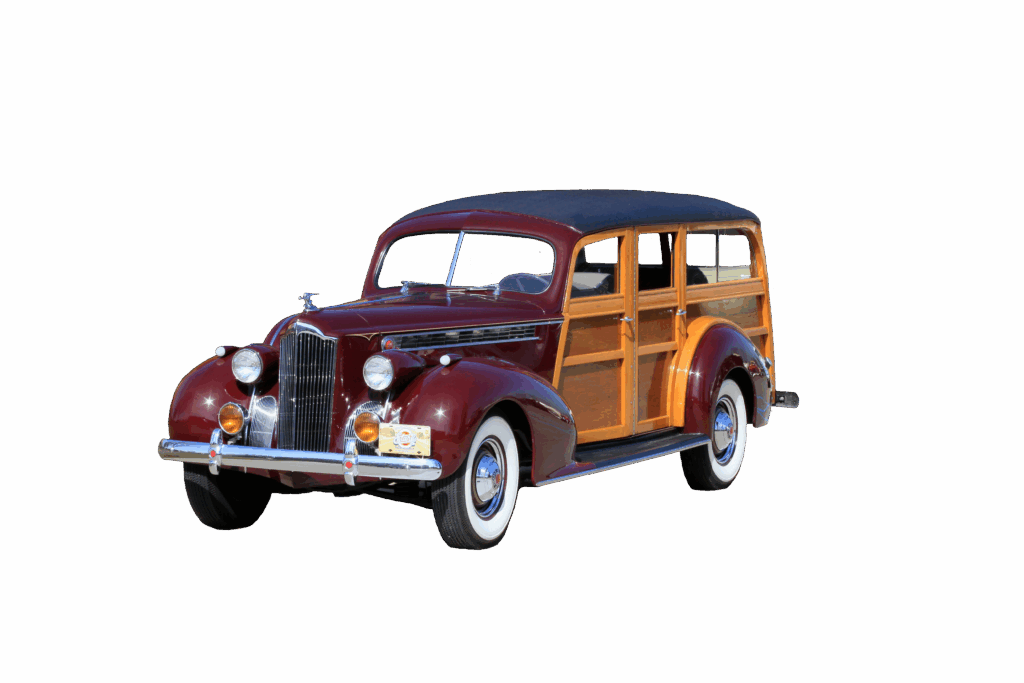
Packard revived the station wagon body style that year to capture a growing niche of well-to-do rural buyers. Before World War II, “woodies” symbolized relaxed affluence—vehicles for country estates and coastal getaways. Crafted from rich mahogany and ash with oak interior trim, these wagons required regular sanding and varnishing, a task typically left to hired help.
Today, this beautifully preserved 1940 Packard 120 Station Wagon resides at the Stahls Motors and Music Experience, a tangible connection to American enterprise, craftsmanship, and the enduring spirit of a man who helped shape modern retail.
Company History
Sebastian S. Kresge, known nationwide as the “dime-store king” and founder of the retail empire that became Kmart, had a taste for both practicality and prestige. In 1940, he purchased a Packard One Twenty Station Wagon, a model that perfectly balanced elegance with everyday utility.
Kresge used his Packard on his 26-acre farm in Mountainhome, Pennsylvania, nestled in the Pocono Mountains near his birthplace. The man who built an empire on five-and-dime stores enjoyed simple pleasures, yet his wit and drive remained legendary. At the 1953 dedication of Kresge Hall at Harvard Business School, a building he funded, he stepped to the podium and told students, “I never made a dime talking.” That was his entire speech.
Even into his late nineties, Kresge guided his expanding business empire as Kresge’s stores evolved into the Kmart brand. He passed away in 1966 at the age of 99, and his third wife, Clara, sold the family’s Packard wagon in 1974. At that time, it had logged just 57,000 miles.